Leading supplier of aluminum, stainless steel, brass, copper, nylon, and Teflon profiles and sheets.

Popular Posts
January 8, 2025
January 22, 2025
January 28, 2025
February 4, 2025
February 25, 2025
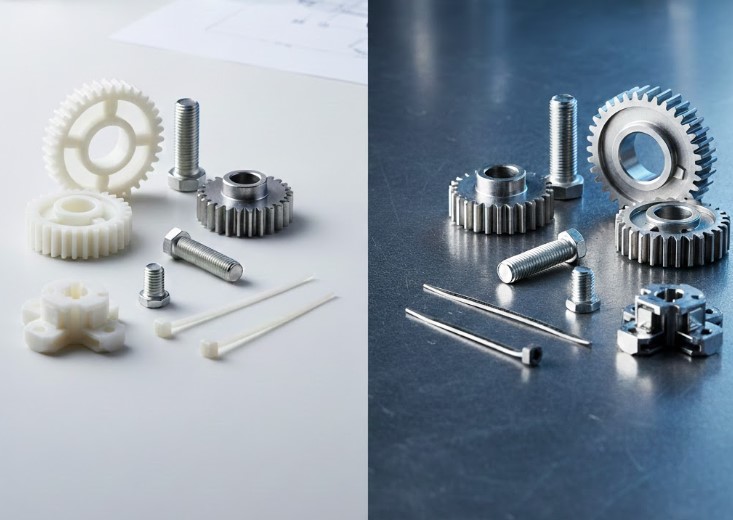
Nylon or Stainless Steel: Which Performs Better and Costs Less?
Selecting the right material for engineering, fabrication, construction, or mechanical components is a critical purchasing decision for companies across Dubai, Sharjah, and Ajman.
Two commonly compared materials are nylon and stainless steel, each with distinct mechanical properties, cost structures, performance characteristics, and application niches.
This guide explores both materials deeply, focusing on technical behavior, cost implications, performance trade‑offs, industry standards, typical suppliers, and practical selection criteria.
Introduction: Why Material Selection Matters
Material choice determines:
- Product durability and lifespan
- Operational reliability
- Total cost of ownership
- Safety and compliance
- Maintenance requirements
In sectors such as manufacturing, marine, chemical processing, and infrastructure, the right material decision directly impacts project success and asset performance.
What Is Nylon?
Nylon refers to a family of synthetic polyamide polymers known for balanced mechanical strength, abrasion resistance, and low friction. It belongs to a class of engineering plastics used widely in high‑performance components.
Common engineering grades include:
- Nylon PA6: Good stiffness and fatigue resistance
- Nylon PA66: Higher heat resistance and strength
- Cast nylon: Lower moisture absorption with improved machinability
Key Physical Properties
| Property | Nylon |
|---|---|
| Density | ~1.14 g/cm³ |
| Tensile Strength | Moderate (40–90 MPa) |
| Impact Resistance | High |
| Temperature Range | ~-40°C to ~120°C |
| Moisture Absorption | Medium |
| Friction | Low (self-lubricating behavior) |
Why Nylon Gets Used
- Excellent wear performance under sliding contact
- High impact resistance
- Lightweight components reduce energy and operational cost
- Often used where metal contact would cause galling or friction heat
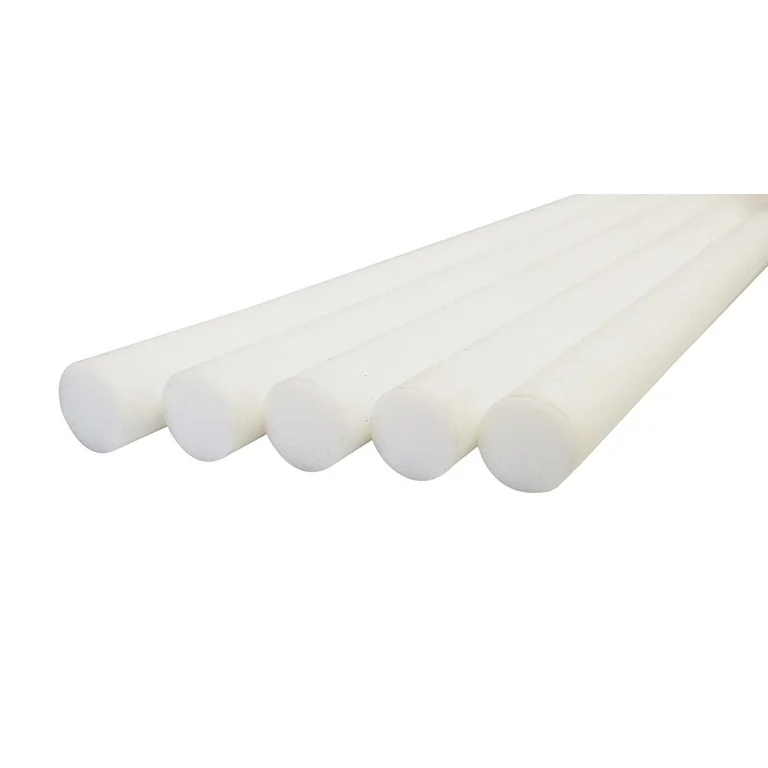
In UAE local markets, engineered nylon components are available in sheet, rod, and custom machine part formats from trusted industrial plastics providers.
As a trusted nylon sheet and bars supplier in UAE, we ensure high-quality materials that meet the needs of manufacturers, fabricators, and engineering projects across the region.
What Is Stainless Steel?
Stainless steel is a metallic alloy defined by:
- Chromium content ≥ 10.5%
- Enhanced corrosion resistance
- High tensile strength and toughness
Common grades used in UAE industries:
- 304 SS – General purpose, corrosion resistant
- 316 / 316L SS – Marine and chemical resistant
- 430 SS – Magnetic grade with moderate corrosion resistance
Key Metallic Properties
| Property | Stainless Steel |
|---|---|
| Density | ~7.8 g/cm³ |
| Tensile Strength | Very High |
| Corrosion Resistance | Excellent |
| Temperature Range | Up to ~900°C (varies by grade) |
| Surface Hardness | High |
| Hygienic Cleanability | Excellent |
Typical Industries
- Marine platforms and ports
- Chemical and petrochemical plants
- Architectural facades and structural connectors
- Food processing and pharmaceutical equipment
In UAE local markets, stainless steel’s longevity and resistance to environmental stressors make it essential for long‑life infrastructure and high‑duty machinery.
As a top stainless steel products supplier in UAE, we provide premium-grade stainless steel solutions that ensure durability, reliability, and optimal performance for industrial and construction applications.
Cost Comparison: UAE Market Reality
Pricing for materials in the UAE reflects global commodity markets, grade quality, and local fabrication accessibility.
Nylon Material Costs
- Nylon sheet prices vary by thickness and grade.
- Typical pricing range (approximate and subject to market changes):
- 10–30 mm thick nylon sheets: AED 800 to AED 1,500 per square meter
- Machine cut rods and custom shapes priced per size and batch
Nylon is generally more cost‑effective for non‑structural components and parts where reduced weight and lower machining cost matter.
Stainless Steel Material Costs
Stainless steel raw material pricing is tied to global steel markets and alloy premiums:
- 304 Stainless Steel Sheet (typical industrial finish): AED 25–35 per kg (varies by thickness)
- 316 Stainless Steel (marine/chemical grade): AED 30–45 per kg
- Polished architectural finishes carry a premium
While per kg cost is higher, stainless steel’s long life, low degradation, and minimal replacement frequency reduce long‑term cost.
Performance Comparison
Mechanical Strength
- Stainless steel is significantly stronger and resists deformation under load.
- Nylon has sufficient strength for moderate loads, especially in bearings and lightweight mechanical parts.
Corrosion & Environmental Suitability
- Stainless steel (especially 316 grade) resists rusting, oxidation, and saline environments vital in coastal UAE.
- Nylon resists many chemicals, but extended outdoor UV exposure or harsh solvents can degrade performance.
Temperature Behavior
- Stainless steel sustains structure at high temperatures (hundreds of °C).
- Nylon softens beyond ~120°C and is unsuitable for high‑heat environments.
Wear & Friction
- Nylon displays naturally lower friction and often reduces wear against metal surfaces without external lubrication.
- Stainless steel may require surface treatment or lubrication to minimize friction losses in moving parts.
Industry Use Cases: When to Choose Each
1. Manufacturing & Automation
Nylon
- Conveyor slides
- Wear pads and guide rails
- Low‑speed gears
Use case rationale: Low friction and ease of machining reduce assembly cost.
2. Marine, Offshore, and Port Installations
Stainless Steel
- Dock hardware
- Fasteners and structural connectors
- Pre‑engineered marine systems
Use case rationale: Superior corrosion resistance at shores and salt spray conditions.
3. Chemical & Petrochemical Plants
Stainless Steel
- Tanks and piping
- Reactor internals
- Heat exchangers
Use case rationale: Cleanability and corrosion resistance to aggressive chemicals.
4. Light Equipment & Internal Machine Components
Nylon
- Bushings and bearings
- Internal alignment guides
- Low‑impact mechanical parts
Use case rationale: Efficiency gains and reduced noise from low friction.
Material Standards & Certifications
In UAE industrial procurement, ensuring compliance with recognized standards is critical:
Nylon Standards
- ASTM D4066: Classification of nylon materials
- ISO 1873: Plastics — polyamide molding and extrusion materials
These standards confirm mechanical performance, thermal behavior, and batch traceability for engineered plastics.
Stainless Steel Standards
- ASTM A240 / A276: Stainless steel plate, sheet and bar specifications
- EN 10088: European stainless steel standard
Adhering to these benchmarks helps industrial buyers ensure reliable performance over asset lifecycle.
Total Cost of Ownership (TCO)
When choosing between nylon and stainless steel, consider TCO, not just purchase price:
Factors to evaluate
- Material cost per unit
- Machining and fabrication costs
- Expected maintenance frequency
- Replacement cycles
- Environmental exposure and life expectancy
In corrosive or high‑stress environments, stainless steel’s longer life often yields lower TCO even if upfront cost is higher.
How to Choose the Right Material
Step 1: Define Load & Stress Requirements
- High loads → Stainless steel
- Moderate loads → Nylon
Step 2: Assess Environmental Exposure
- Salt spray, moisture → Stainless steel
- Indoor, controlled environment → Nylon acceptable
Step 3: Lifecycle & Maintenance Expectations
- Long life, minimal maintenance → Stainless steel
- Periodic part replacement ok → Nylon
Step 4: Fabrication Complexity
- Complex machining → Nylon can be cost-efficient
- Welded joins and structural assemblies → Stainless steel
FAQs
Is stainless steel always better than nylon?
Not always; stainless steel excels in strength and corrosion resistance, while nylon is better for low friction, lightweight components.
Can nylon be used in food processing equipment in UAE?
Yes, nylon is used for internal non‑contact parts, but 316 stainless steel is preferred for surfaces that contact food.
Does stainless steel rust in UAE coastal environments?
Grade 316 stainless steel is highly resistant to coastal corrosion and salt spray.
Is nylon cheaper to machine than stainless steel?
Yes, nylon’s lower hardness and machinability reduce fabrication time and tooling cost.
What affects long‑term cost more material or maintenance?
Maintenance and part replacement often outweigh the initial material cost, especially in corrosive conditions.
Conclusion
Selecting between nylon and stainless steel depends on performance needs and project requirements. Nylon offers lightweight, cost-effective solutions for internal machinery and low-stress components, while stainless steel provides superior strength, durability, and corrosion resistance for structural, marine, and heavy-duty applications.
Understanding these differences helps buyers in Dubai, Sharjah, Ajman, and across the UAE make informed decisions that optimize reliability and long-term costs.
Partnering with a trusted supplier like Hussain Aluminium Co L.L.C ensures access to high-quality, certified nylon and stainless steel sheets and bars with expert guidance and support.
Read More Industry Expert Insights
Access expert guidance on aluminum, metals, and industrial materials tailored for reliable project planning across the UAE.
- Corrosion-Resistant Metals: How to Choose the Right One: Choose materials that deliver strength, safety, and long-term reliability.
- Nylon vs Teflon: Key Differences & Industrial Applications: Comparing Nylon and Teflon for Industrial Performance
- How Weather and Humidity Affect Brass Instruments: Explains how climate conditions impact brass instrument performance and durability.
- Copper: Properties, Uses & Benefits in Industrial Applications: High conductivity metal powering efficient and durable industrial systems.
- Stainless Steel Surface Finishes and Their Applications: Engineered finishes enhancing durability, hygiene, and aesthetic performance
copyright © Hussain Aluminium Co L.L.C. All Rights Reserved.