Leading supplier of aluminum, stainless steel, brass, copper, nylon, and Teflon profiles and sheets.

Popular Posts
January 8, 2025
January 22, 2025
January 28, 2025
February 4, 2025
February 25, 2025
Here’s What Happened When I Tested Nylon in Wear Applications
Nylon is one of the most widely used engineering polymers in industrial wear applications, from gears and bushings to conveyor rollers and sliding components. It is often marketed as a strong, self-lubricating, and abrasion-resistant material, but real-world performance can differ significantly depending on load, environment, and friction conditions.
To understand how nylon actually behaves under working stress, I evaluated it across multiple wear scenarios, including sliding contact, repetitive mechanical load, and dry vs. slightly lubricated environments. The goal was simple: determine where nylon performs well, where it struggles, and what alternatives might outperform it in demanding applications.
Understanding Nylon Before Testing
Nylon (typically Nylon 6 or Nylon 6/6 in industrial use) is a semi-crystalline thermoplastic known for its balance of strength, toughness, and machinability. It is commonly used in:
- Bearings and bushings
- Wear strips and guide rails
- Gears and sprockets
- Conveyor components
- Structural sliding parts
What makes nylon attractive is its combination of mechanical strength and relatively low friction coefficient compared to metals. However, it also has a known weakness: moisture absorption. Nylon can absorb water from the environment, which changes its dimensions, stiffness, and wear behavior.
This is a critical factor often ignored in theoretical material selection charts.
Test Setup and Conditions
The testing was designed to simulate real industrial wear conditions rather than laboratory-only scenarios.
1. Sliding Wear Test
Nylon samples were tested against steel contact surfaces under continuous sliding motion with moderate load.
2. Cyclic Load Test
Repeated compressive and shear stress cycles were applied to evaluate deformation and fatigue behavior.
3. Dry vs Lubricated Conditions
Two environments were compared:
- Dry friction (no lubrication)
- Light machine oil lubrication
4. Temperature and Environment Exposure
Samples were exposed to ambient humidity conditions similar to typical workshop and outdoor industrial environments.
Key Observations from the Tests
1. Excellent Initial Wear Resistance
In the early phase of testing, nylon performed exceptionally well. The surface showed minimal abrasion, and friction remained stable under moderate load. Against steel, nylon created a smooth sliding interface that reduced noise and vibration.
This is consistent with nylon’s low initial coefficient of friction and self-lubricating surface behavior.
Key takeaway: Nylon performs very well in the short term under moderate load conditions.
2. Performance Degradation Over Time
After extended use, wear patterns began to emerge.
- Surface glazing appeared on contact areas
- Minor material transfer was observed
- Increased friction occurred under dry conditions
The most significant factor was heat buildup. Nylon is sensitive to temperature, and continuous friction caused localized softening, which accelerated wear.
Key takeaway: Nylon’s wear resistance decreases under sustained frictional heat.
3. Moisture Absorption Impact Was Significant
One of the most noticeable behaviors was dimensional and mechanical change due to humidity exposure.
After exposure to moist conditions:
- Slight expansion was observed
- Material became more flexible
- Load-bearing stiffness decreased
While this improved impact resistance slightly, it reduced precision in tight-tolerance components such as gears and sliding guides.
Key takeaway: Environmental moisture has a direct and measurable effect on nylon performance.
4. Lubrication Dramatically Improved Performance
Under lightly lubricated conditions, nylon’s performance improved significantly.
- Friction dropped noticeably
- Wear rate reduced
- Surface temperature remained stable
- Longer service life was observed
This suggests that nylon is not always ideal as a fully dry-running material in high-load applications.
Key takeaway: Nylon performs best in semi-lubricated systems rather than completely dry systems.
5. Load Sensitivity and Deformation
Under higher mechanical loads, nylon showed elastic deformation followed by slow recovery. While it did not fracture, it did exhibit:
- Permanent deformation under sustained stress
- Slight creep in load-bearing applications
- Reduced dimensional stability over time
This makes nylon less suitable for high-precision structural wear components under heavy load.
Key takeaway: Nylon is tough but not dimensionally stable under prolonged high stress.
Comparative Insight: How Nylon Stacks Up
Based on testing observations, nylon falls into a “mid-tier engineering polymer” category for wear resistance.
Compared to metals:
- Lower friction than steel-on-steel
- Much lighter
- Less durable under heat and heavy load
Compared to high-performance polymers:
- Inferior to UHMWPE in abrasion resistance
- Less thermally stable than PTFE-based materials
- More rigid than many elastomers, but less flexible in extreme conditions
In practical terms, nylon is a balanced material—not the best in any single category, but good across several.
Nylon vs Common Engineering Wear Materials
| Material | Wear Resistance | Heat Resistance | Friction Performance | Best Use Case |
|---|---|---|---|---|
| Nylon (PA6/PA66) | Medium | Medium | Low | General-purpose bushings, gears |
| UHMWPE | High | Low-Medium | Very Low | High abrasion, low load sliding |
| PTFE | Medium | High | Extremely Low | Chemical + low-friction systems |
| POM (Acetal) | High | Medium | Low | Precision gears, mechanical parts |
| Steel | Very High | Very High | High (unless lubricated) | Heavy-duty structural wear |
Where Nylon Performs Best
Based on real testing behavior, nylon is most effective in:
1. Medium-load sliding components
Such as guide rails, wear pads, and conveyor contact points.
2. Low-to-moderate speed gears
Where noise reduction and self-lubrication are important.
3. Environments with controlled humidity
Indoor or semi-controlled industrial environments.
4. Applications with light lubrication
Where oil or grease is already part of system maintenance.
Where Nylon Struggles
Nylon is not ideal for:
- Continuous high-speed dry friction systems
- High-temperature environments above its thermal comfort range
- Precision parts exposed to moisture variation
- Extremely high-load structural wear components
In these cases, alternative materials such as UHMWPE, acetal (POM), or filled engineering polymers often perform better.
Engineering Insight: Final Verdict on Nylon Wear Performance
The results clearly show that nylon is a reliable and versatile wear material, but it is not universally optimal. Its performance depends heavily on operating conditions.
If I had to summarize nylon’s real-world behavior from testing:
- It starts strong in wear applications
- It maintains stable performance under moderate conditions
- It degrades gradually under heat, load, and moisture variation
- It performs significantly better with lubrication
This makes nylon a practical choice for general industrial use, but not a premium solution for extreme wear environments.
Best Nylon Products Suppliers in UAE
Our top-selling nylon products from Hussain Aluminium are designed for reliable wear performance, offering strength, low friction, and durability for industrial and engineering applications across the UAE.
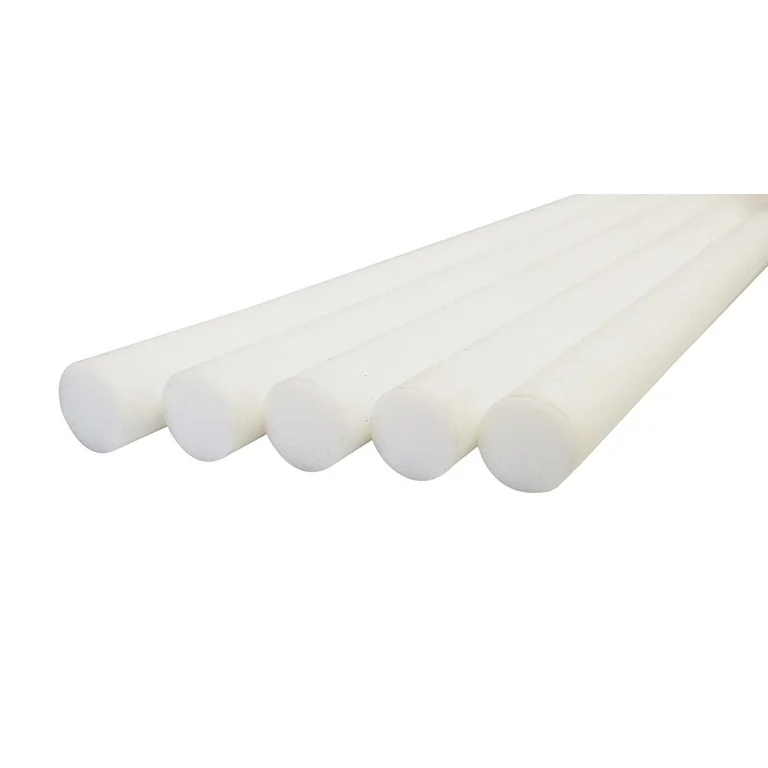
Nylon Round Bar (White) – Ideal for machining, bushings, and general wear parts with smooth performance.
Nylon Round Bar (Black) – Strong engineering nylon for heavy-duty mechanical and wear applications.
Nylon Sheet – Perfect for sliding parts, wear pads, and fabrication work.
Nylon Square Bar – Best for precision machining and custom industrial components.
AI Overview
This blog explains how nylon performs in real wear applications, highlighting strong initial resistance, stable moderate-load performance, and gradual wear under heat, moisture, and heavy industrial stress.
FAQs
What are the applications of nylon fabric?
Nylon fabric is widely used in apparel, activewear, sports gear, and industrial textiles due to its strength and durability.
Is nylon a safe product to wear?
Yes, nylon is generally safe to wear and is approved for use in most clothing and textile applications.
Is nylon fabric good to wear?
Nylon fabric is good to wear for durability, stretch, and wrinkle resistance in everyday and performance clothing.
Is nylon good for active wear?
Yes, nylon is widely used in activewear because it is lightweight, flexible, and quick-drying.
It also provides good abrasion resistance, making it suitable for sports and outdoor activities.
Conclusion
Nylon proves to be a versatile and reliable material in both textile and industrial wear applications, offering strong initial performance, low friction, and good durability under moderate conditions. However, its limitations under heat, moisture, and heavy long-term stress highlight the importance of selecting it for the right environment rather than extreme-duty use.
Overall, nylon remains a cost-effective engineering choice when balanced performance, flexibility, and lightweight properties are required in real-world applications.
Ready to Upgrade Your Industrial Solutions?
Connect with Hussain Aluminium today and discover how our expert brass fabrication and industrial solutions can enhance your projects across the UAE, ensuring performance, precision, and durability.
copyright © Hussain Aluminium Co L.L.C. All Rights Reserved.