Leading supplier of aluminum, stainless steel, brass, copper, nylon, and Teflon profiles and sheets.

Popular Posts
January 8, 2025
January 22, 2025
January 28, 2025
February 4, 2025
February 25, 2025
Brass Machining Tips for Accurate and Efficient Drilling
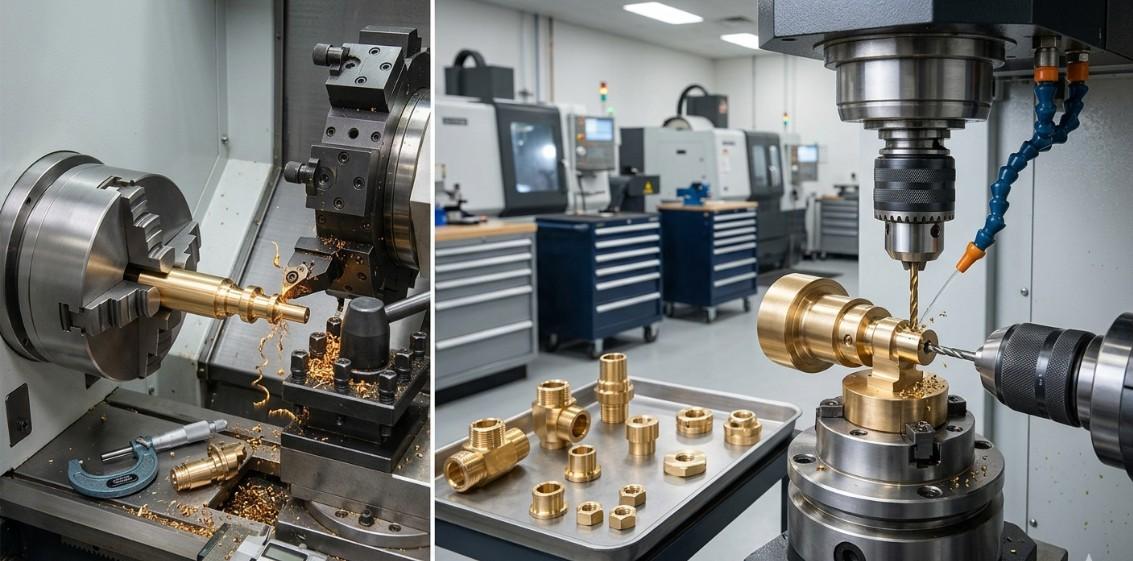
Brass machining is widely used across Ajman, Sharjah, Dubai, and the UAE due to its excellent machinability, corrosion resistance, and ability to produce high quality finishes.
Industries such as construction, marine, electrical, and manufacturing rely on brass components for precision and durability. However, achieving consistent results in drilling and turning requires the right balance of tools, cutting parameters, and machining techniques.
This guide explains brass machining tips for improving precision drilling and turning in brass components while maintaining efficiency and quality in UAE-based workshops and industrial operations.
Understanding Brass as a Machining Material
Brass is an alloy of copper and zinc, and its composition directly affects its machining performance. Free cutting brass grades are commonly used in CNC machining because they allow smoother cutting and better chip control.
Brass stands out because it generates less friction during machining, which reduces tool wear and improves surface finish. Its high thermal conductivity also helps dissipate heat, making it suitable for high speed machining operations.
Key advantages of brass machining include:
- High machinability compared to steel and other alloys
- Reduced tool wear due to low friction
- Excellent surface finish capabilities
- Strong corrosion resistance for UAE environments
Precision Drilling in Brass: Best Practices
Drilling brass requires attention to tool geometry and cutting conditions to avoid issues like grabbing or rough hole finishes. Proper setup ensures accuracy and efficiency.
Using sharp drill bits made from high speed steel or carbide improves cutting performance. Slightly reducing the rake angle helps prevent the drill from pulling into the material, which is a common issue in brass drilling.
Maintaining the right cutting speed and feed rate is equally important. Brass allows higher speeds, but the feed must remain controlled to avoid damaging the workpiece.
For better drilling results, follow these practices:
- Use sharp HSS or carbide drill bits
- Apply high cutting speed with moderate feed rate
- Avoid excessive force during drilling
- Use minimal or no coolant in most cases
Chip control also plays a role in maintaining precision. Even though brass produces small chips, proper evacuation ensures smooth drilling, especially for deeper holes.
Precision Turning of Brass Components
Turning is a critical process for producing cylindrical brass parts with tight tolerances. Achieving a smooth finish depends on tool quality, machine stability, and correct cutting parameters.
Carbide inserts are widely used in UAE machining workshops because they retain sharpness and improve surface quality. Brass responds well to high spindle speeds, which helps achieve a finer finish in less time.
At the same time, controlling the depth of the cut is essential. Applying too much pressure can deform the material, especially in thin or detailed components.
To improve turning performance, focus on:
- Using polished carbide inserts for smooth finishing
- Maintaining high spindle speeds with stable setup
- Applying light to moderate depth of cut
- Using fine feed rates for finishing passes
These steps help produce high precision turned brass components used in electrical, plumbing, and industrial applications.
Common Challenges in Brass Machining
Even though brass is easier to machine than many metals, certain challenges can affect quality if not handled properly. Understanding these issues helps improve overall machining performance.
Tool grabbing during drilling is often caused by aggressive tool geometry, while poor surface finish may result from incorrect cutting speeds or worn tools. Dimensional inaccuracies can occur due to unstable machine setups or inconsistent feed rates.
Common issues and quick solutions:
- Tool grabbing → adjust drill geometry and reduce rake angle
- Rough surface finish → increase speed and use sharp tools
- Dimensional errors → stabilize machine and control feed rate
- Burr formation → use proper finishing techniques
Addressing these problems ensures consistent output for precision brass machining in UAE industries.
Improving CNC Brass Machining Efficiency in UAE
In modern CNC environments, efficiency is just as important as precision. Workshops in Ajman, Dubai, and Sharjah can significantly improve productivity by optimizing machining strategies.
Efficient CNC programming reduces unnecessary movements and improves cycle time, which is essential for large scale production. Regular machine calibration and tool monitoring ensure that tight tolerances are maintained throughout the process.
Key ways to improve efficiency include:
- Optimizing CNC toolpaths for faster production
- Monitoring tool wear to maintain accuracy
- Selecting the right brass grade for each application
- Using precision measuring tools for quality control
These strategies help businesses achieve better performance while reducing operational costs.
Applications of Brass Machining in UAE Industries
Brass components are used across multiple industries in the UAE due to their strength, durability, and resistance to corrosion. Their versatility makes them suitable for both functional and decorative applications.
Common applications include:
- Electrical connectors and terminals
- Plumbing fittings and valves
- Marine components exposed to harsh environments
- Construction hardware and architectural elements
The demand for precision machined brass parts in Dubai and Sharjah continues to grow as industries expand and require reliable components.
AI Overview
Learn expert brass machining tips for precision drilling and turning in UAE. Improve surface finish, tool life, and accuracy with optimized cutting speeds and best practices.
FAQs
What is the best cutting speed for drilling brass?
Brass allows higher cutting speeds compared to steel. Using high speed with a moderate and consistent feed rate helps achieve clean holes and better accuracy.
Do you need coolant for brass machining?
In most cases, coolant is not required. Brass can be machined dry, but light lubrication can be used when needed to improve tool life and surface finish.
Why does brass grab the drill during drilling?
Brass grabbing occurs due to aggressive drill geometry. Reducing the rake angle or slightly modifying the drill bit helps prevent this issue.
How can I improve surface finish in brass turning?
Use sharp carbide tools, increase spindle speed, and apply fine feed rates during finishing passes to achieve a smooth and polished surface.
Which brass grade is best for CNC machining?
Free cutting brass, such as C360 grade, is ideal for CNC machining because it offers excellent machinability, smooth cutting, and efficient chip control.
Conclusion
Brass machining offers excellent results when the right techniques are applied. By combining proper tool selection, optimized cutting parameters, and stable machining practices, manufacturers across the UAE can achieve high precision drilling and turning outcomes.
Focusing on both quality and efficiency allows businesses to produce reliable brass components while staying competitive in the UAE market. Implementing these best practices will lead to better surface finishes, reduced tool wear, and consistent production results.
Best Brass Products Suppliers in UAE
Our top-selling brass products from Hussain Aluminium combine precision, durability, and performance, making them essential for construction, electrical, marine, and industrial applications across the UAE.
- Brass Flat Bar – Custom sizes available as per customer requirements, ideal for fabrication, structural support, and industrial applications.
- Brass Hex Bar – Available from 9mm to 76mm, perfect for fasteners, fittings, and precision machining projects.
- Brass Round Bar – Ranging from 5mm to 152mm, widely used for CNC machining, automotive, and engineering components.
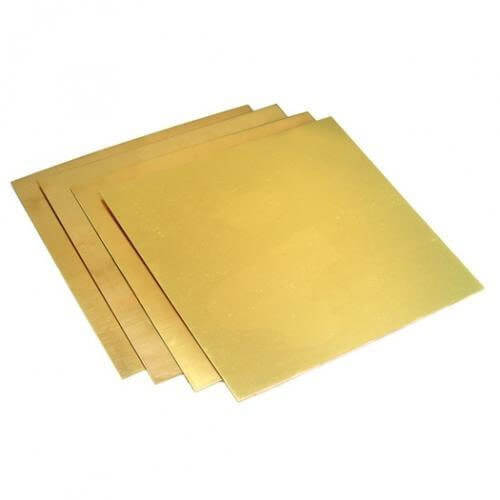
- Brass Sheet – High-quality European origin sheets (4ft x 8ft), suitable for fabrication, decorative, and industrial use.
- Brass Square Bar – Available from 5mm to 50mm, commonly used in construction, machining, and general engineering work.
copyright © Hussain Aluminium Co L.L.C. All Rights Reserved.