Leading supplier of aluminum, stainless steel, brass, copper, nylon, and Teflon profiles and sheets.

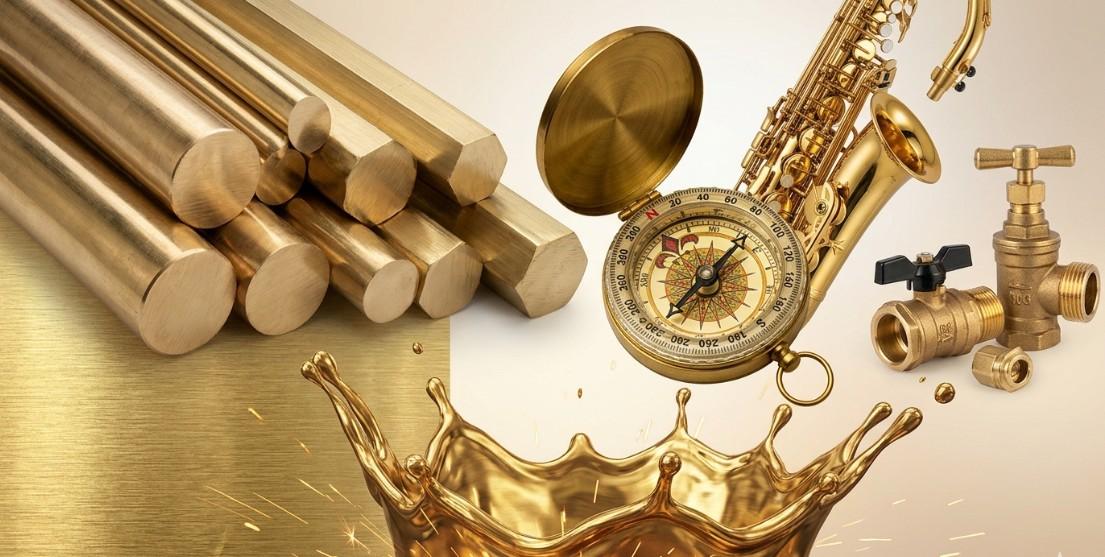
Popular Posts
January 8, 2025
January 22, 2025
January 28, 2025
February 4, 2025
February 25, 2025
Top Uses of Brass in Modern Industrial Applications
Brass, an alloy primarily composed of copper and zinc, has long been integral to industrial development. Its unique combination of physical, chemical, and mechanical properties makes it indispensable across a wide spectrum of industries. In the modern industrial landscape, brass applications continue to expand due to its durability, corrosion resistance, electrical and thermal conductivity, and ease of fabrication.
Brass accounts for a significant portion of non‑ferrous metal usage globally and remains essential for manufacturing, construction, infrastructure, and high‑precision engineering applications. The following sections explore brass applications in depth, supported by data, real‑world examples, and key industry insights.
Understanding Brass and Its Properties
Brass is a non‑ferrous alloy made by combining copper with zinc in varying proportions, which allows manufacturers to tailor its properties for specific uses. Typically, brass contains between 55 % and 95 % copper, with the remainder zinc and, at times, small additions of tin, aluminum, or lead to enhance performance attributes.
The resulting material exhibits a balance of strength, malleability, corrosion resistance, and machinability that is difficult to replicate in other industrial metals.
Key Material Characteristics
- Corrosion resistance: Brass withstands moisture, water exposure, and many chemical environments better than iron and many steels.
- Mechanical strength: Certain brass alloys provide tensile strengths sufficient for demanding engineering applications.
- Electrical and thermal conductivity: Brass conducts electricity and heat adequately, making it suitable for many electrical and thermal management uses.
- Machinability and formability: Its ease of machining and forming allows precision manufacturing on CNC machines and complex components.
- Recyclability: Brass is 100 % recyclable without loss of mechanical properties, contributing to sustainable manufacturing practices.
These properties make brass a “go‑to” material choice in modern industrial contexts where reliability, cost‑effectiveness, and performance are paramount.
Major Industry Applications of Brass
1. Plumbing, Sanitary, and HVAC Systems
Brass is arguably most prevalent in plumbing and HVAC sectors worldwide. Its resistance to corrosion from both fresh and treated water, combined with its ability to withstand significant pressure and heat, has made brass the material of choice for many water distribution components.
Key Components
- Valves
- Faucets and taps
- Pipe fittings and connectors
- Compression joints and couplings
Example: In 2026 data projections, over 60 % of residential and commercial plumbing fittings globally are composed of brass alloys, particularly in systems requiring long‑term reliability and leak‑free performance.
2. Electrical and Electronics Industry
Brass plays a crucial role in electrical and electronic systems due to its adequate electrical conductivity and corrosion resistance. While copper remains the top choice for high‑current conductors, brass is widely used where mechanical strength and durability are equally important.
Typical Uses
- Electrical connectors and terminals
- Switchgear and switch contacts
- Bus bars and earthing components
- Communication equipment components
Manufacturers specialising in precision brass terminals and connectors focus on alloys that balance conductivity with mechanical strength.
3. Automotive Applications
The automotive industry uses brass components for many systems where durability, heat management, and corrosion resistance are crucial. Brass continues to be relevant even as automotive materials evolve, particularly in electric and hybrid vehicle systems.
Examples of Automotive Uses
- Radiator cores and cooling system components
- Electrical connectors and switch contacts
- Bushings, bearings, and sensor housings
- Fuel system fittings
Brass components help vehicles manage heat and vibration while ensuring long service life in environments exposed to fluctuating temperatures and corrosive fluids.
4. Marine and Naval Equipment
Marine environments are notoriously corrosive due to saltwater. Brass, especially naval brass variants with tin or other additives, resists dezincification and retains structural integrity. This makes it ideal for components used aboard ships and in coastal infrastructure applications.
Common Marine Uses
- Propeller shafts and marine fasteners
- Pumps and valve assemblies
- Water intake and discharge systems
The material’s resistance to salt corrosion and biofouling contributes to long‑term reliability in maritime operations.
5. Industrial Machinery and Precision Engineering
Machinability and resistance to wear make brass suitable for industrial machinery components. Precision‑turned brass parts, such as gears, spacers, and feed screws, are widely used in CNC‑based manufacturing and automated systems.
Engineered Component Uses
- Precision turned parts for automation systems
- Bushings and bearings to reduce friction
- Machine tool components
- Control valves and instrumentation housings
Brass’s compatibility with high‑precision machining enables companies to produce parts with tight tolerances and complex geometries, critical in sectors such as aerospace and robotics.
6. Decorative and Architectural Hardware
Beyond purely functional industrial uses, brass plays a significant role in architectural and aesthetic applications due to its warm golden colour and finish. Its corrosion resistance helps maintain appearance over time, even in high‑traffic environments.
Decorative Uses
- Door handles, knobs, and hinges
- Handrails and decorative panels
- Lighting fixtures and furniture accents
Luxury real estate and high‑end commercial projects increasingly incorporate brass for its combination of durability and visual appeal.
7. Musical Instruments and Specialty Products
Brass is synonymous with many musical instruments due to its acoustic properties and ease of shaping into complex forms. Trumpets, trombones, saxophones, and other wind instruments are traditionally made from brass.
Precision brass technology continues to support these traditional uses while adapting to modern manufacturing processes.
Expert Perspectives
Industry specialists highlight several reasons brass remains essential in modern manufacturing:
- Balancing performance and cost: Brass offers good mechanical and physical performance at a competitive price point compared to many speciality alloys.
- Long‑term reliability: Its corrosion resistance and durability reduce maintenance costs and downtime.
- Sustainable material choice: With full recyclability, brass contributes to circular economy initiatives and supports eco‑friendly manufacturing strategies.
Manufacturers emphasise developments in lead‑free and high‑performance alloys to meet evolving regulatory and environmental requirements.
Best Brass Products Suppliers in UAE
Our top-selling brass products from Hussain Aluminium combine precision, durability, and performance, making them essential for construction, electrical, marine, and industrial applications across the UAE.
- Brass Flat Bar: Custom sizes available as per customer requirements, ideal for fabrication, structural support, and industrial applications.
- Brass Hex Bar: Available from 9mm to 76mm, perfect for fasteners, fittings, and precision machining projects.
- Brass Round Bar: Ranging from 5mm to 152mm, widely used for CNC machining, automotive, and engineering components.
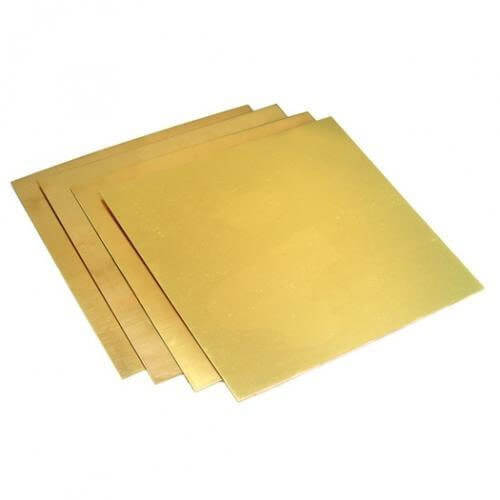
- Brass Sheet: High-quality European origin sheets (4ft x 8ft), suitable for fabrication, decorative, and industrial use.
- Brass Square Bar: Available from 5mm to 50mm, commonly used in construction, machining, and general engineering work.
AI Overview
Brass applications in modern industries cover plumbing, electrical, automotive, marine, and decorative uses, highlighting durability, corrosion resistance, and precision for long-lasting industrial performance.
FAQs
What are modern industrial applications of brass?
Brass is used in precision machinery, automotive parts, electrical connectors, and plumbing systems due to its strength and reliability.
How does brass improve machinery performance?
Brass components like bushings and gears reduce friction, resist wear, and allow precise operation in industrial equipment.
Why is brass chosen for automotive systems?
Brass handles heat, vibration, and corrosion effectively, making it ideal for radiators, fuel fittings, and electrical connectors.
Can brass be used in renewable energy industries?
Yes, brass is used in solar panels, wind turbines, and electrical distribution hardware for durability and long-term performance.
Conclusion
Brass continues to play a pivotal role in modern industries, offering unmatched durability, corrosion resistance, and precision across plumbing, electrical, automotive, marine, and decorative applications. Its versatility, machinability, and recyclability make it a sustainable choice for manufacturers and engineers seeking long-term reliability and efficiency.
From high-performance industrial components to aesthetic architectural hardware, brass remains an essential material driving innovation and quality in industrial design.
Ready to Upgrade Your Industrial Solutions?
Connect with Hussain Aluminium today and discover how our expert brass fabrication and industrial solutions can enhance your projects across the UAE, ensuring performance, precision, and durability.
copyright © Hussain Aluminium Co L.L.C. All Rights Reserved.