Leading supplier of aluminum, stainless steel, brass, copper, nylon, and Teflon profiles and sheets.
Popular Posts
January 8, 2025
January 22, 2025
January 28, 2025
February 4, 2025
February 25, 2025
Why Aluminum Profiles Are Popular Among UAE Contractors
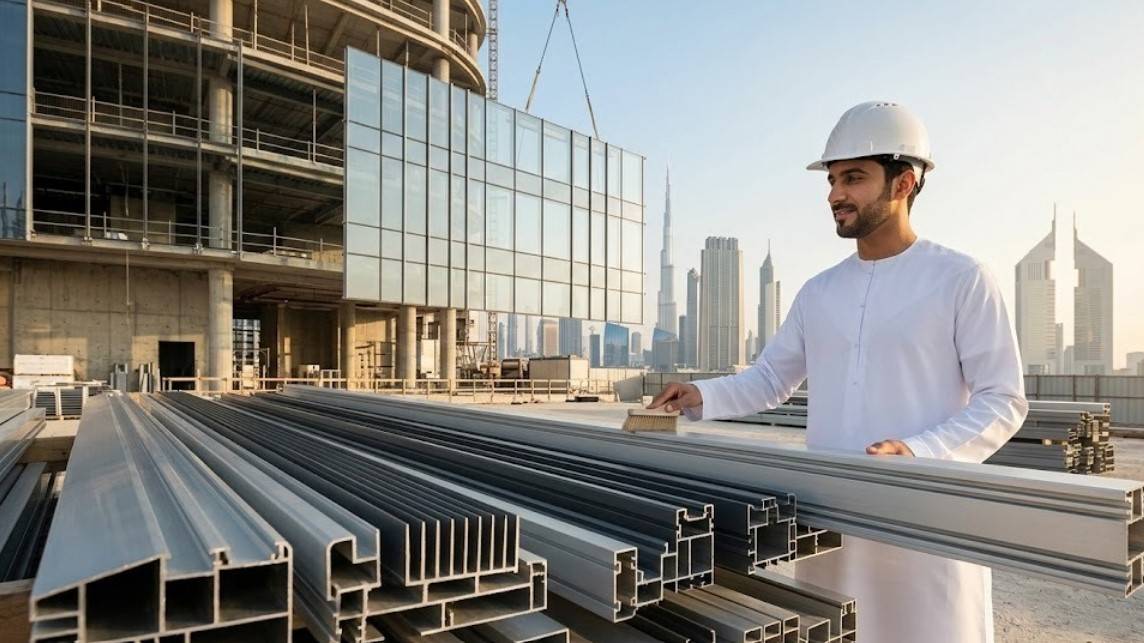
In the UAE, the construction and industrial sectors are evolving rapidly, driven by urban development, infrastructure projects, and commercial expansion in cities like Dubai, Sharjah, and Ajman.
Choosing the right building materials is crucial for project success, efficiency, and long-term durability. Among these materials, aluminum profiles have emerged as a preferred choice over traditional steel for many contractors and industrial applications.
This article explores the reasons why UAE contractors are increasingly opting for aluminum profiles over steel, highlighting the advantages, cost-benefit factors, and practical applications across the region.
1. Lightweight Nature for Easier Handling and Installation
One of the most significant advantages of aluminum over steel is its lightweight properties. Aluminum weighs approximately one-third of steel while maintaining considerable strength.
For UAE construction projects, this offers:
- Easier handling on-site
- Reduced labor costs during installation
- Quicker project timelines
Contractors in Dubai, Sharjah, and Ajman value materials that accelerate construction without compromising quality, and aluminum profiles fit this requirement perfectly.
2. Superior Corrosion Resistance
The UAE’s coastal environment, particularly in cities like Dubai and Sharjah, exposes construction materials to high humidity, salt-laden air, and extreme temperatures.
Aluminum naturally forms a protective oxide layer, making it highly resistant to corrosion, whereas steel requires additional treatments such as galvanization or painting.
This characteristic reduces maintenance costs and extends the life of structures, making aluminum a cost-effective choice for both commercial and industrial projects.
3. Flexibility and Customization
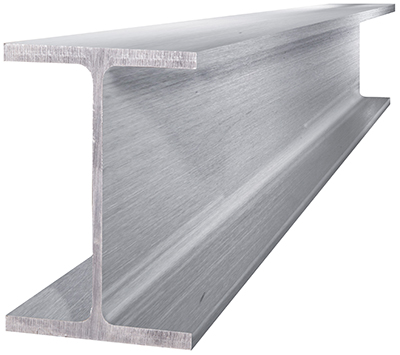
Aluminum is easier to extrude, shape, and cut into specific profiles compared to steel. Contractors can choose from:
- T-slot aluminum profiles for modular construction
- Custom sizes for facade panels and partitions
- Lightweight structural frames for industrial setups
This flexibility allows UAE contractors to implement innovative designs and adapt to modern architectural requirements without compromising structural integrity.
4. Aesthetic Appeal
Aluminum offers a sleek, modern look that is increasingly preferred in contemporary UAE architecture. It can be:
- Powder-coated in various colors
- Anodized for a polished finish
- Combined with glass or other materials for modern facades
For commercial buildings, malls, and residential projects in Dubai and Sharjah, aluminum enhances visual appeal while maintaining durability.
5. Sustainable and Environmentally Friendly Material
Sustainability is becoming a priority in UAE construction, especially in projects seeking LEED certification or green building standards. Aluminum is 100% recyclable without losing quality, making it a sustainable alternative to steel.
Contractors and developers increasingly choose aluminum to reduce environmental impact while meeting regulatory and green building expectations.
6. Reduced Transportation and Labor Costs
Due to its lightweight nature, aluminum profiles reduce transportation costs compared to steel. Trucks can carry more aluminum per shipment, decreasing logistical expenses.
Additionally, less manpower is required for handling and installation, which is a key consideration for large-scale projects in Dubai, Ajman, and across the UAE. These savings make aluminum profiles an economically viable option.
7. Long-Term Durability and Low Maintenance
Aluminum structures require minimal maintenance compared to steel, which can rust or degrade over time. Contractors in the UAE favor materials that provide long-term durability with minimal upkeep, particularly for exterior facades, industrial frameworks, and modular structures exposed to extreme weather conditions.
8. Resistance to Extreme UAE Climate
UAE contractors must account for extreme heat, high UV exposure, and coastal humidity. Aluminum maintains its structural integrity under temperature fluctuations, while steel may expand, contract, or corrode without proper treatment. This reliability makes aluminum ideal for both indoor and outdoor applications.
9. Compatibility with Modern Construction Techniques
Aluminum profiles are widely used in prefabricated construction, modular buildings, and industrial assemblies. Their ease of installation, flexibility, and lightweight nature make them compatible with modern UAE construction techniques that aim to reduce project timelines and labor costs.
This trend is particularly visible in Dubai’s growing commercial, residential, and industrial sectors.
10. Cost-Effectiveness Over Project Lifecycle
While the initial cost of aluminum may be slightly higher than untreated steel, contractors in the UAE recognize that lifecycle costs are lower due to:
- Reduced maintenance and repair
- Corrosion resistance
- Longevity and durability
- Faster installation and reduced labor
This long-term cost advantage is a key reason for the preference of aluminum profiles in Dubai, Sharjah, and Ajman construction projects.
AI Overview
UAE contractors prefer aluminum profiles over steel for their lightweight, corrosion-resistant, durable, customizable, and cost-effective properties suitable for Dubai, Sharjah, and Ajman projects.
FAQs
Why are aluminum profiles preferred over steel in UAE construction?
Aluminum profiles are lightweight, corrosion-resistant, customizable, sustainable, and cost-effective over the project lifecycle.
Are aluminum profiles durable in UAE’s coastal and hot climate?
Yes. Aluminum resists corrosion, extreme heat, and humidity, making it ideal for outdoor and industrial applications.
Can aluminum profiles be customized for modern UAE building designs?
Yes. Aluminum is easy to cut, shape, anodize, and powder-coat, offering flexibility for facades, partitions, and modular constructions.
Is aluminum more cost-effective than steel in the long term?
Yes. While initial costs may be slightly higher, reduced maintenance, labor savings, and durability make aluminum more economical over time.
Conclusion
UAE contractors are increasingly choosing aluminum profiles over steel due to lightweight handling, corrosion resistance, flexibility, aesthetic appeal, sustainability, and long-term cost-effectiveness.
The combination of these factors makes aluminum a practical and modern material choice for residential, commercial, and industrial projects across Dubai, Sharjah, Ajman, and the wider UAE.
By incorporating aluminum profiles into their projects and connecting with authorized aluminum suppliers, contractors can achieve faster construction timelines, reduce maintenance costs, and deliver high-quality, durable structures that meet both architectural and environmental standards.
Related Aluminium Insights
- UAE Aluminium Boom: What’s Powering the New Surge: Key factors driving the rapid growth of the UAE aluminium industry.
- Threats Facing the Aluminum Industry: Major challenges affecting the global aluminium market.
- Aluminum vs Stainless Steel: A quick comparison of aluminium and stainless steel applications.
- How to Choose the Right Aluminum Alloy: Simple guide to selecting the right aluminium alloy.
- Aluminium Sheet Surface Finishes: Overview of common aluminium sheet finishes and uses.
copyright © Hussain Aluminium Co L.L.C. All Rights Reserved.